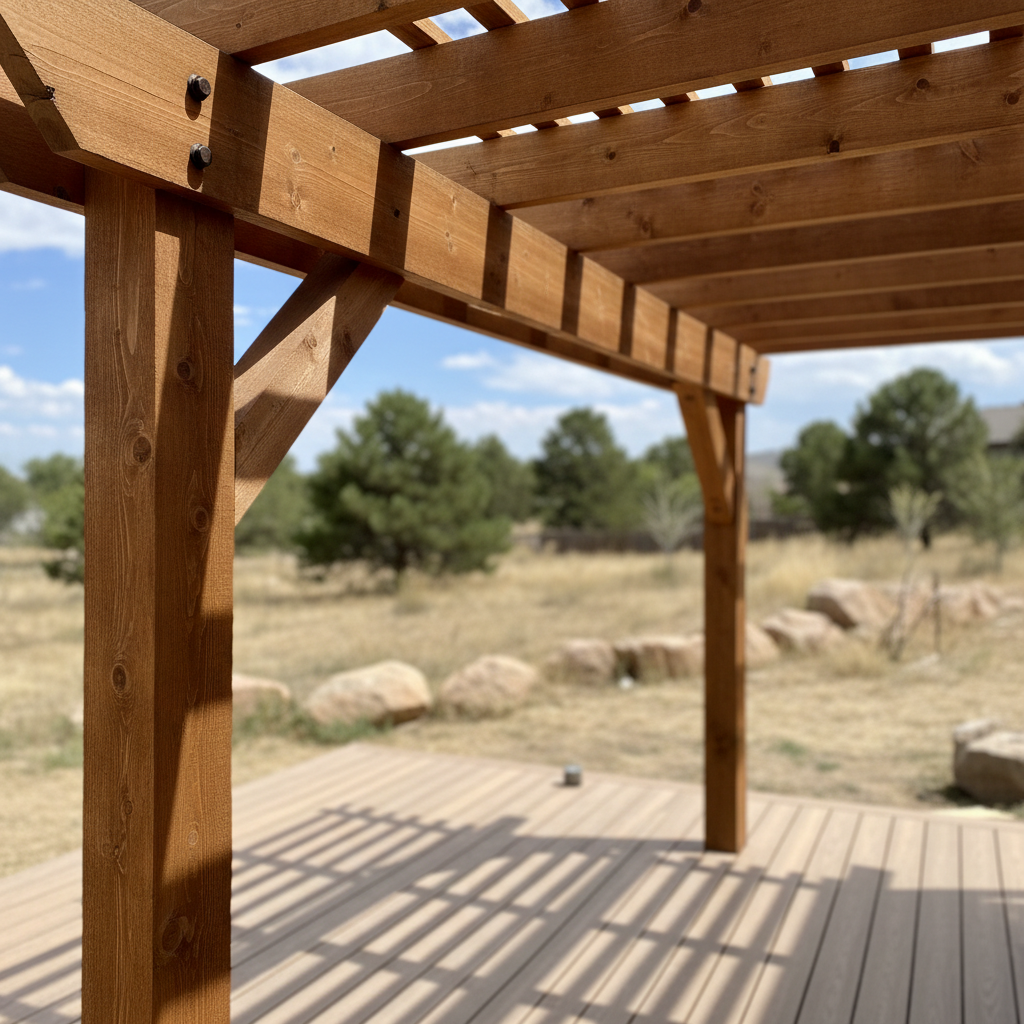
Thinking about a pergola, are we? Smart move. They really add a ton of personality and make a backyard way more useful. Over the years, building these structures for folks all around Lakewood, I’ve heard the same questions pop up again and again. So, instead of answering them one by one, I figured I’d just put it all down here. This isn't some slick marketing pitch; it’s just what I’ve picked up working in this business, especially right here in our part of town.
What's the real difference between an attached and a freestanding pergola?
This is probably the first big decision you'll make, and honestly, it boils down to how you plan to use the space. An attached pergola, just like it sounds, connects right to your house. It usually has two posts on the outer edge, with the other side anchored to your home's fascia or wall. Picture it as an extension of your living room, often covering a patio right outside a sliding door. The big perk? It feels like part of the house, makes going from inside to out super smooth, and it can be a bit more stable since it's tied into the house structure. Plus, you save on a couple of posts and footings, which is nice.
A freestanding pergola, on the other hand, stands completely on its own, held up by four or more posts. You can put these pretty much anywhere in your yard – maybe over a separate seating area, next to a pool, or even as a cool gateway to a garden path. They give you a lot more wiggle room with where they go and how they look. You're not stuck with the house's existing structure. The downside? You'll need more posts, more footings, and usually a bit more planning if you want things like electricity for lights or fans out there. For many homes in the older parts of Lakewood, say around Green Mountain, where you might have a big, open yard, a freestanding one can really help define a space.
Do I need a permit to build a pergola in Lakewood?
Alright, this is a big one, and the answer is almost always, "yes, you probably do." The City of Lakewood, just like most towns, has rules for outdoor structures. Generally, if your pergola is over a certain size (often 200 square feet) or if it's attached to your house, you'll definitely need a building permit. Even if it's smaller and freestanding, some zoning rules might still apply, especially about how far it has to be from property lines. You'll need to send in plans, show your property lines, and sometimes even engineering specifics, particularly with our local expansive clay soils which can be tricky for foundations. It's not a fun process, but it's super important. Skipping it can lead to fines, having to tear the thing down, or problems when you try to sell your house. As a reputable builder, Superior Decks & Pergolas handles all the permitting for our clients, so you don't have to stress about the paperwork.
What materials are best for a pergola in our Colorado climate?
Our climate here in Colorado is no joke, right? We get intense sun, heavy snow, and big temperature swings. So, picking the right material is super important for how long it'll last. For wood, cedar and redwood are popular choices because they naturally resist rot and bugs. Pressure-treated lumber is also a good, cheaper option, but it needs to be stained or painted to look good and protect it from the elements. The tricky part with wood is it needs regular upkeep – staining or sealing every few years – to keep it looking sharp and stop it from cracking or warping from the sun and snow.
Then you've got composite or vinyl. These are practically maintenance-free. They won't rot, warp, or get eaten by critters. They come in all sorts of colors and styles, often looking a lot like real wood. The initial cost is usually higher than wood, but when you think about not having to maintain it over its whole life, it can be a really smart investment. Aluminum pergolas are another excellent choice, especially if you're going for a more modern vibe, and they're incredibly tough and light. I usually tell people to weigh the upfront cost against how much long-term maintenance they're willing to do. For most folks, especially with our harsh winters, something low-maintenance like composite or aluminum often makes the most sense.
How do I choose the right size and style for my yard?
This is where the fun really starts! First, think about what you actually want to do under the pergola. Are you putting a dining table for six? A cozy seating area? An outdoor kitchen? Measure the furniture you plan to put there and then add at least 2-3 feet on all sides so you can move around comfortably. You don't want it to feel cramped, do you? As for style, take a good look at your house's architecture. If you have a traditional brick home, a classic wood pergola with decorative ends might fit best. If your home is more modern, maybe a sleek aluminum or composite design with clean lines is better. You want it to look like it belongs, not like an afterthought.
Consider the scale too. A huge pergola can totally swallow a small yard, and a tiny one can get lost in a big space. We often use design software to show clients how different sizes and styles will look in their actual yard, which helps a lot. Don't forget about height either; you want enough headroom, but not so tall it feels disconnected from the ground.
Can I add features like lighting, fans, or heaters to a pergola?
Absolutely, and I really recommend it! Adding these features is what truly turns a pergola from just a structure into a genuinely useful outdoor living space. For lighting, you've got tons of options: recessed LED lights in the rafters, string lights wrapped around the beams, or even a central chandelier. Fans are a lifesaver during those hot summer afternoons, helping to move air around and keep bugs away. Heaters, whether electric radiant heaters or propane-powered patio heaters, let you use your pergola well into the cooler evenings of spring and fall. We've even installed outdoor TVs and sound systems under pergolas.
The main thing here is planning ahead. You'll want to run electrical conduit during the initial construction phase, before everything is finished, to hide wires and make sure everything is up to code and safe. It's much harder and more expensive to add these things later. So, think about your ideal outdoor setup from the very beginning.
How much shade will a pergola actually provide?
This is a common misunderstanding. A traditional pergola, with its open lattice or parallel beams, isn't really built to give you full, dense shade like a solid roof. It offers dappled shade – a beautiful mix of light and shadow that shifts throughout the day. It's great for softening the sun's intensity and making a space feel cooler, but you'll still get some direct sun. The amount of shade depends on how close together the rafters and purlins (those smaller cross-beams) are. Closer spacing means more shade, naturally.
If you need more serious shade, you have options. You can add a retractable canopy system that slides open and closed, giving you total control. Shade sails or fabric panels can also be draped over the top. Or, you could grow climbing vines like wisteria or grapes over the structure; they'll provide natural, living shade, though it takes a while for them to get established. We often talk about these options with clients during the design phase to make sure they get the shade level they're looking for, especially with our intense Colorado sun.